Wondering why one part of San Luis Obispo feels full of porches and early cottages, while another leans single-story and suburban, and newer areas look more compact or planned? If you are trying to buy, sell, or simply understand the city better, that difference matters. San Luis Obispo is not defined by one neighborhood style, but by a sequence of styles that reflect how the city has grown over time. Let’s dive in.
San Luis Obispo Has Layered Styles
San Luis Obispo reads like a timeline on the ground. The oldest urban fabric sits downtown, early 20th-century residential districts surround the core, postwar ranch neighborhoods mark later growth, and newer infill and planned communities are shaping the city’s edges.
That pattern is not accidental. The City recognizes five historic districts through its Historic Preservation program, while current housing policy supports infill, small-lot development, and smaller downtown units. The City also says it needs to accommodate up to 3,354 new homes between 2020 and 2028, which helps explain why newer housing often appears in more compact forms.
For you as a buyer or seller, this means style in San Luis Obispo is tied closely to location, era, and land use. A home’s look often tells you something about its setting, lot pattern, and the broader neighborhood feel.
Classic Homes Near Downtown
If you love older homes with visible character, the downtown-adjacent historic areas are the clearest place to start. These neighborhoods tend to have tighter blocks, mature trees, front porches, and a more layered streetscape than later suburban areas.
The City’s historic district descriptions point to Downtown as the oldest part of San Luis Obispo, centered around the Mission. Old Town and the Railroad district add more of that early-city pattern, with architecture tied to the late 1800s and early 1900s. Together, these areas create some of the city’s most walkable and visually varied residential streets.
Craftsman Bungalows and Cottages
Craftsman is one of the signature early residential styles in San Luis Obispo. The Citywide Historic Context Statement describes these homes, often called bungalows, as generally one- or one-and-a-half-story houses with low-pitched gabled roofs, wide eaves, grouped windows, porch emphasis, and natural materials.
If you want a strong local example, Mill Street stands out. The City describes the Mill Street Historic District as a tree-lined block with Tudor Revival, Craftsman, Mission Revival, Prairie Colonial Revival, and Shingle houses, making it one of the clearest snapshots of early residential variety.
For buyers, these homes often appeal because the architecture feels personal and detailed. For sellers, that same detail can shape how a property is presented, especially when original form, porch presence, and period character remain intact.
Colonial Revival and Neo-Classical Cottage
San Luis Obispo also has a strong Colonial Revival thread in its older neighborhoods. The City says American Colonial Revival became widespread during the first half of the 20th century, with side-gabled or hipped roofs, prominent entries or porticos, and multi-pane sash windows.
A simpler related form is the Neo-Classical Cottage. The City describes it as a cottage type with restrained porch or cornice detailing and notes that it is especially prominent along Pismo Street.
A 2022 City review of 1133 Pismo Street also describes nearby Colonial Revival and Craftsman homes from the 1910s and 1920s. That helps reinforce Pismo Street and nearby Old Town areas as useful reference points if you are drawn to early-20th-century architecture.
Historic Areas Feel Different
Older neighborhoods in San Luis Obispo tend to feel close-in and porch-fronted rather than spread out and car-oriented. The district descriptions emphasize urban blocks, street trees, and architecture tied to the city’s 1895 to 1910 downtown boom.
That creates a different rhythm than you will find in later neighborhoods. Homes often sit within a more compact street grid, and the visual experience comes from varied facades, older materials, and a stronger connection between the house and the street.
If design matters to you, this is where San Luis Obispo can feel especially rich. You are not just choosing a house style. You are choosing a streetscape and a pattern of living that developed before postwar suburban expansion.
Ranch Homes Define Midcentury SLO
For a midcentury chapter, Ranch homes are the key style to know. The Citywide Historic Context Statement says Ranch houses became especially popular in the late 1950s and 1960s and were the dominant domestic style in Southern California’s postwar suburbs.
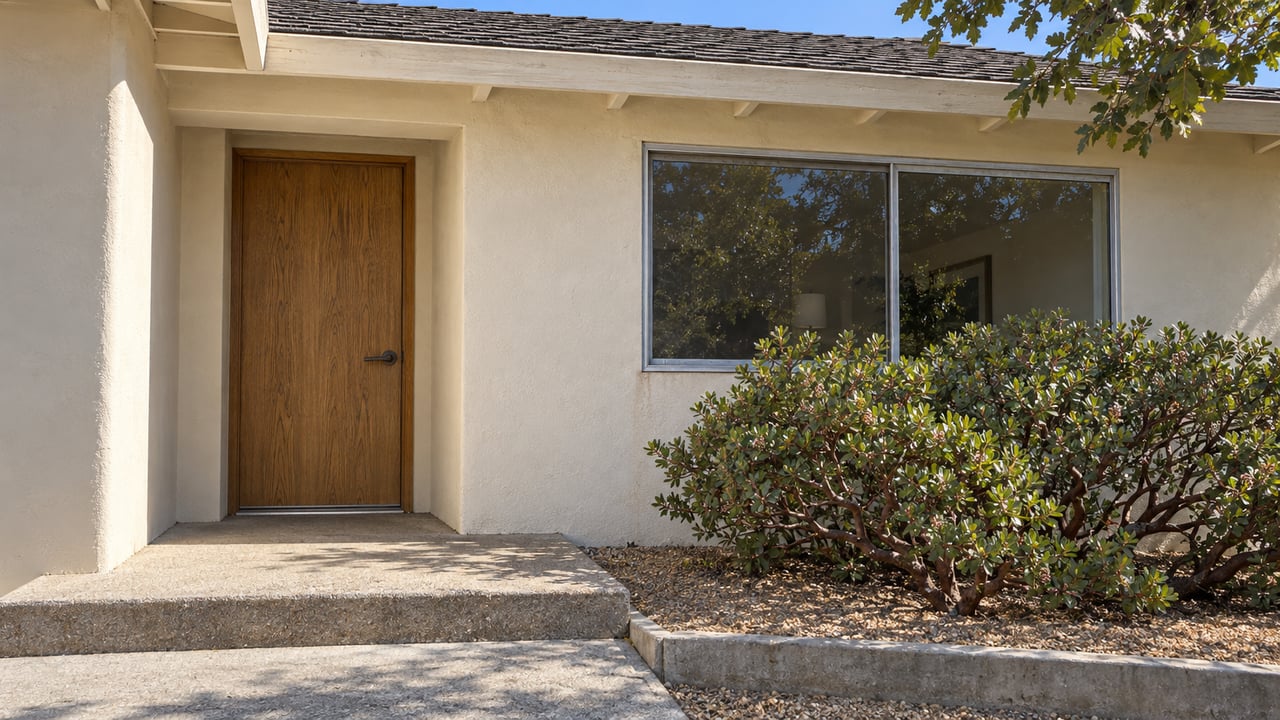
These homes are generally defined by one-story construction, low horizontal massing, a broad street-facing facade, and an attached garage. In practical terms, they often represent the city’s clearest single-level residential form.
Where Ranch Style Shows Up
The City’s context statement illustrates Ranch style with examples on Tanglewood and San Luis Drive. Those streets help show the difference between the historic core and the postwar pattern that followed.
Compared with older downtown-adjacent neighborhoods, Ranch areas often feel more open and suburban. Lots and streetscapes usually read as later-era planning, with less porch emphasis and more orientation toward driveway access and garage placement.
For buyers, this style can be appealing if you value single-level living or a simpler layout. For sellers, the appeal often comes from functionality, footprint, and how the home fits today’s preferences without requiring a historic-home mindset.
New Infill Is Shaping the Core
San Luis Obispo’s newer housing story is not only happening at the edges. The City is actively steering some growth toward compact infill, especially in and around Downtown.
The Downtown Flexible Density Program is intended to encourage smaller residential units in the Downtown Core without increasing building height or overall scale. The City also reports updated subdivision regulations that increase flexibility for small-lot developments and notes that unused commercial space is being converted into small residential units.
This matters because it changes what “new” can look like in San Luis Obispo. Instead of only large subdivisions, some newer housing appears as smaller units and infill projects woven into existing urban areas.
South Broad Shows the Old-New Mix
South Broad is one of the best examples of that transition. The City’s Area Plan calls for higher-density infill housing, mixed uses, innovative design concepts, walkable streets and public spaces, and about 355 new dwellings over 20 years.
The same plan describes the area as a place where historic dwellings coexist with commercial, light industrial, and business space. That mix makes South Broad useful if you want to understand how San Luis Obispo is layering new development into older urban fabric rather than replacing it with one single look.
For buyers, that can mean more variety in housing type and setting. For sellers and owners, it can also mean the surrounding context is evolving in ways that may affect how a property is positioned and understood in the market.
Planned Neighborhoods Shape New Growth
At the city’s edges, the newest neighborhoods are less about one classic architectural style and more about a planned mix of housing types, open space, and neighborhood-serving features. These areas reflect modern community planning rather than historic architectural purity.
The City describes Avila Ranch as a primarily residential 150-acre project with up to 720 dwellings, plus retail, parks, open space, and design guidelines. San Luis Ranch envisions up to 580 residential units along with commercial, office, hotel, agriculture, and open-space components. Froom Ranch is envisioned as a primarily residential plan with a variety of unit types, multiple-family housing, and roughly 60 percent open space.
What Newer Neighborhoods Usually Offer
In practical terms, newer planned neighborhoods often trade some private lot size for design variety, open space, and proximity to services. They may include detached homes, attached homes, and multifamily options within the same larger plan.
That gives you a different experience from both the historic core and postwar ranch areas. Instead of one dominant home style, the focus shifts toward community layout, housing mix, and how different uses fit together.
How To Think About Style As You Search
If you are house hunting in San Luis Obispo, it helps to think beyond the facade. Style is part architecture, part era, and part neighborhood pattern.
A simple framework can help:
- Want classic character? Focus on downtown-adjacent historic districts, including areas around Old Town, Pismo Street, and Mill Street.
- Want single-level midcentury form? Look to postwar neighborhoods where Ranch homes are more common, including areas with examples on Tanglewood and San Luis Drive.
- Want compact newer housing? Watch Downtown and South Broad, where the City is encouraging infill, smaller units, and flexible density.
- Want modern planned development? Explore Avila Ranch, San Luis Ranch, and Froom Ranch for a mix of housing types and open-space-driven planning.
This kind of lens can also help sellers. When you understand where your home sits in the city’s style story, it becomes easier to present its value clearly, whether that value is charm, layout, flexibility, or future-minded neighborhood planning.
Why This Matters For Buyers and Sellers
Neighborhood style affects more than curb appeal. It shapes how a home lives, how the street feels, and how buyers often compare one part of San Luis Obispo to another.
For buyers, the right fit may come down to whether you want historic detail, single-level practicality, or a newer low-maintenance setup. For sellers, knowing your home’s style context can sharpen pricing, marketing, and the story you tell about the property.
That is especially true in a city like San Luis Obispo, where no single look defines the market. The strongest opportunities often come from understanding how design, neighborhood pattern, and value connect.
If you want help matching neighborhood character with your goals, or positioning your home with a sharper eye for design and market value, Jordan Jackson can help you evaluate the options and build a strategy that fits.
FAQs
What home styles are common in San Luis Obispo neighborhoods?
- San Luis Obispo includes early-20th-century Craftsman bungalows, cottages, Colonial Revival homes, midcentury Ranch homes, newer downtown infill housing, and planned neighborhoods with mixed housing types.
Where can you find historic homes in San Luis Obispo?
- Downtown-adjacent historic areas, especially around Old Town, Pismo Street, and Mill Street, are the clearest places to see older homes with early-20th-century architectural character.
What defines Ranch homes in San Luis Obispo?
- The City describes Ranch homes as generally one-story houses with low horizontal massing, a broad street-facing facade, and an attached garage, especially popular in the late 1950s and 1960s.
Where is newer infill housing appearing in San Luis Obispo?
- Downtown and South Broad are key areas for newer infill, smaller units, and compact housing forms supported by the City’s housing policies.
Which San Luis Obispo neighborhoods reflect newer planned growth?
- Avila Ranch, San Luis Ranch, and Froom Ranch are the main examples of newer planned neighborhoods with a mix of residential types, open space, and neighborhood-serving features.