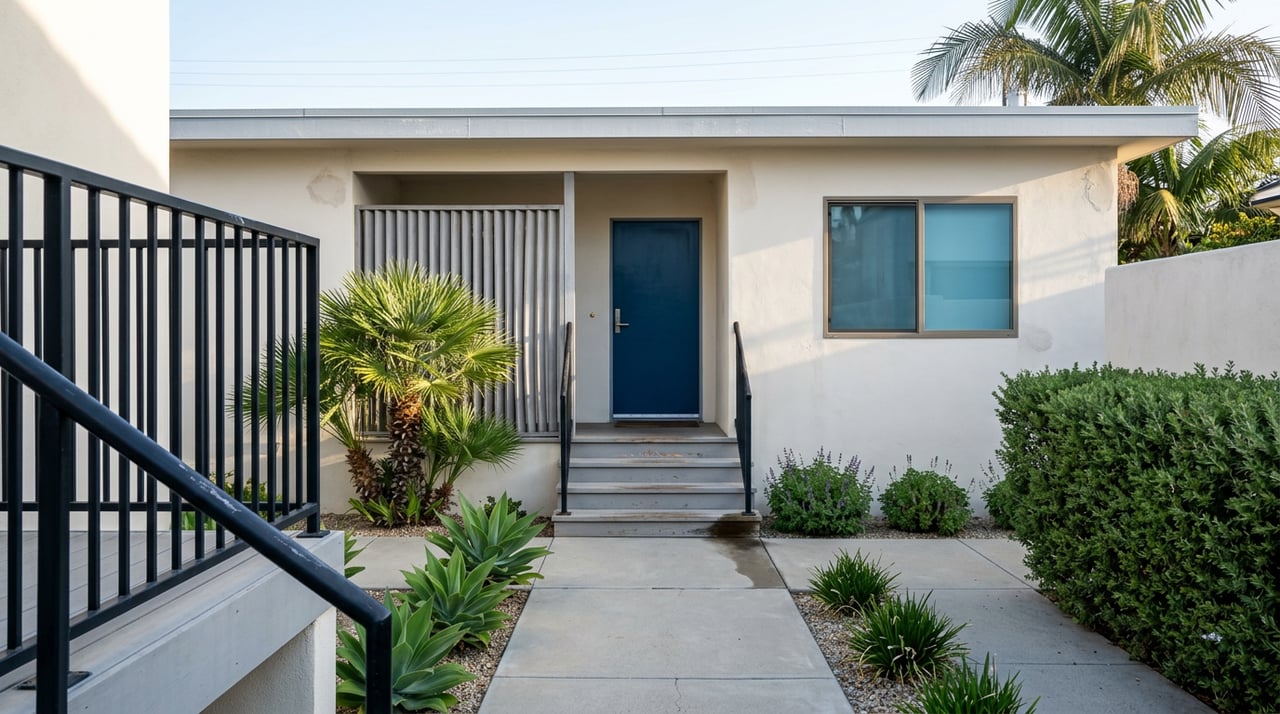
The listing agent pulls up the booking calendar before you've even reached the kitchen. Forty-some nights reserved through the fall, an average nightly rate that makes the mortgage payment look almost incidental. It's the pitch behind nearly every "Airbnb-ready" listing in Pismo Beach right now, and it's also the pitch that skips past the one detail the city cares about most: none of that calendar transfers to you at closing.
In Pismo Beach, the right to operate a short-term rental is a license held by a person, not a feature attached to the deed. The city stopped issuing new residential short-term rental licenses on November 7, 2023, when the City Council adopted Ordinance O-2023-006. Whatever booking history, guest reviews, or projected income a seller shows you, the legal permission behind it stays with them. Buy the house and you are, by the city's own rules, starting from zero.
How a temporary pause became a permanent wall
This didn't happen overnight. Pismo Beach's original short-term rental rules date to 2018, considered ahead of the curve for a coastal city at the time. As the vacation rental market kept expanding, the city imposed a moratorium on new licenses, then extended it more than once, with a final extension set to run through June 20, 2024. Rather than let that moratorium lapse and reopen the door, the council adopted the permanent ordinance in November 2023, which closed new licensing for good and ended the moratorium at the same time. According to the city's own findings at adoption, there were 28 licensed short-term rental and homestay properties on record. That's the entire population of legally operating whole-home rentals outside the Downtown Core, frozen at that count going forward.
The city's FAQ page states it plainly: permits do not transfer with the sale of a property, and even a Downtown Core vacation rental requires the new owner to file a fresh application rather than inherit the seller's. A license doesn't run with the land in Pismo Beach. It runs with the person who applied for it.
Two very different zones, and only one is still open
Not every part of Pismo Beach faces the same wall, which is exactly why the zoning distinction matters more than most buyers realize.
| Vacation Rental (VR) | Short-Term Rental (STR) | |
|---|---|---|
| Where it's allowed | C-1, RR, R-4, and coastal downtown sub-zones (CD-C, CD-M, CD-V) | R-1, R-2, R-3, RSL, RSM, PR, OS-1, OS |
| Owner-occupancy required | No | Yes, as the operator's primary residence |
| New licenses currently issued | Yes, through the standard application process | No, frozen since November 7, 2023 |
| Typical setting | Downtown Core and select commercial-adjacent parcels | Single-family neighborhoods |
A Vacation Rental in the Downtown Core doesn't require the owner to live there, and new applications are still accepted. Everywhere else, in the residential zones where most of Pismo Beach's housing stock actually sits, the door closed in late 2023 regardless of whether you'd occupy the home. If the property you're touring is a standard single-family house in an R-1 or R-2 neighborhood advertised as a short-term rental, the calendar you're looking at belongs to a license that cannot be reissued to you no matter how the offer is structured.
Homestays sit in their own category. An owner can rent bedrooms in a home they occupy with no annual cap on rental days, but the arrangement only works while the owner is physically present. Accessory dwelling units add another layer buyers frequently misread: an ADU cannot be rented out as its own independent short-term rental. If it's attached to the main house, the owner has to live in the ADU and hold a homestay license for it. A detached ADU occupied by the owner can, in some cases, count as the owner's primary residence while the main house operates as the licensed STR, but that's a structural decision made before purchase, not something a new owner can retrofit after the fact.
What it costs to get this wrong
The enforcement mechanics are specific enough that they change how a buyer should read a listing's income claims. Operating without a license, or even advertising an unlicensed property on a platform like Airbnb or VRBO, is treated as a violation on its own, independent of whether a booking ever gets confirmed. Fines start at a minimum of $1,500 for a first violation, rise to $3,000 for a second within a year, and reach $5,000 for each additional violation within that same year. Each night of unauthorized operation can be counted as a separate violation, which means a single unlicensed weekend booking isn't one fine, it can be several.
Before any license is issued, the city inspects the property to confirm bedroom count, on-site parking, and safety standards, and it retains the right to reinspect if a complaint comes in. A license that lapses or transfers on paper without matching the current physical layout of the home isn't a formality problem. It's a fresh inspection, on the city's timeline, not the buyer's.
The gross number on the listing isn't the number in your pocket
Rising prices make this gap more expensive to misread, not less. As of an update in late June 2026, the average home value across Pismo Beach stood at roughly $1.12 million, up 2.5 percent over the prior year. Looking at closed sales over the three months ending in May 2026, the median sale price reached $1.4 million, up 4.1 percent year over year, with homes selling in about 42 days on average and 45 homes changing hands that May compared with 35 the year before. That's a market where buyers are increasingly willing to stretch for a property, and a documented short-term rental history is one of the easiest ways to justify stretching further.
But guests already pay roughly 14.5 percent in combined lodging taxes and assessments on top of the nightly rate, a cost the operator collects and remits rather than pockets. Layer that onto a license that legally cannot be inherited, and the gross booking figures on a listing sheet represent a business that ends at closing, not an income stream priced into the deed. A buyer who pays a premium for "established Airbnb income" in a residential zone is, in practical terms, paying for a story about the seller's history rather than a right they'll be able to exercise themselves.
None of this means short-term rental ownership in Pismo Beach is a dead end. Vacation Rentals in the Downtown Core remain a live path, and the 28 or so existing licensed STR properties still change hands every year, provided the buyer applies fresh and clears the city's inspection rather than assuming the seller's paperwork carries over. It does mean the due diligence has to happen before contingencies come off, not after.
Before writing an offer on a property marketed for its rental potential, a few questions are worth answering directly with the city rather than taking the listing's word for it:
- Is the license attached to this specific address currently active, and does the zone even allow new STR applications, or only Vacation Rental applications in the Downtown Core?
- Does the current bedroom count and parking configuration match what the city inspected at last licensing, or has anything changed since?
- If the plan involves an ADU, is it detached or attached, and who would need to live where to keep both structures compliant?
Some of these answers live in the municipal code itself. Others require a call to the Planning Division. Either way, the calendar on the listing app tells you what a seller has been earning. It doesn't tell you what you're legally allowed to do the day you own the house.
If you're weighing a Pismo Beach property for its income potential, or preparing to sell one and want to know what actually transfers and what doesn't, Jordan Jackson can walk through the licensing picture with you before you're locked into an offer. Book a consultation and get the zoning and permit history sorted out while you still have room to negotiate.